

A comprehensive guide to the latest and greatest in augmented reality eyewear
May 25, 2025
As we move deeper into 2025, smart glasses and augmented reality headsets have evolved from niche gadgets to essential tech tools. Whether you’re looking for immersive mixed reality experiences, sleek everyday wearables, or enterprise-focused solutions, the current lineup of smart glasses offers unprecedented features and capabilities.
In this comprehensive guide, we’ll dive deep into the five best smart glasses of 2025, comparing their specifications, unique features, real-world performance, and value proposition. From Apple’s premium Vision Pro to Meta’s accessible Quest 3, we’ll help you navigate this exciting frontier of wearable technology.

1. Apple Vision Pro
$3,499 – $3,899
Apple’s Vision Pro represents the pinnacle of mixed reality technology in 2025. This premium headset blends virtual and augmented reality with Apple’s signature design excellence and ecosystem integration. While it comes with a steep price tag, the Vision Pro delivers unparalleled visual fidelity, intuitive controls, and a growing library of spatial applications.
Key Specifications:
- Display: Dual micro-OLED displays with 23 million pixels total
- Processor: Apple M2 chip paired with R1 co-processor
- Memory: 16GB unified memory
- Storage: 256GB, 512GB, or 1TB options
- Battery Life: 2-2.5 hours (external battery)
- Weight: 600-650g plus 353g external battery
- Controls: Eye tracking, hand gestures, voice commands
- Operating System: visionOS
Pros
- Unmatched display quality and resolution
- Precise eye and hand tracking
- Seamless integration with Apple ecosystem
- Innovative Optic ID authentication
- Growing library of spatial applications
Cons
- Extremely high price point
- Limited battery life
- Bulky form factor with external battery
- Still developing app ecosystem
- Requires Apple devices for optimal experience
2. Meta Quest 3
$499 – $649
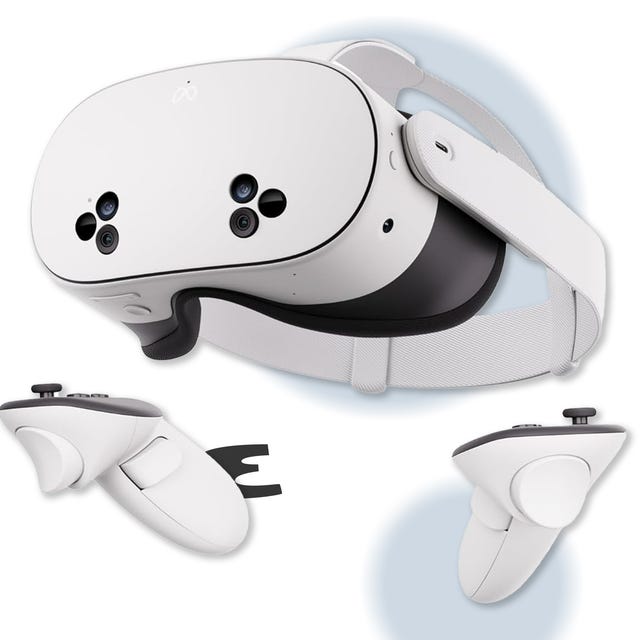
The Meta Quest 3 continues to dominate the consumer VR market in 2025 with its excellent balance of performance, features, and affordability. This standalone mixed reality headset delivers impressive visuals, intuitive controls, and access to Meta’s vast content library. With full-color passthrough and enhanced tracking, it bridges the gap between virtual and augmented reality experiences.
Key Specifications:
- Display: Dual LCD displays (2064×2208 pixels per eye)
- Processor: Qualcomm Snapdragon XR2 Gen 2
- Memory: 8GB RAM
- Storage: 128GB or 512GB options
- Battery Life: 2-3 hours
- Weight: 515 grams
- Field of View: 110° horizontal, 96° vertical
- Controllers: Touch Plus controllers (no outer tracking rings)
Pros
- Excellent value for money
- Full color passthrough for mixed reality
- Impressive resolution and visuals
- Standalone operation (no PC required)
- Large game and app library
Cons
- Limited battery life
- Not as powerful as PC-connected headsets
- Requires Facebook/Meta account
- Less comfortable for extended sessions
- Hand tracking less precise than competitors
3. Microsoft HoloLens 2
$3,500
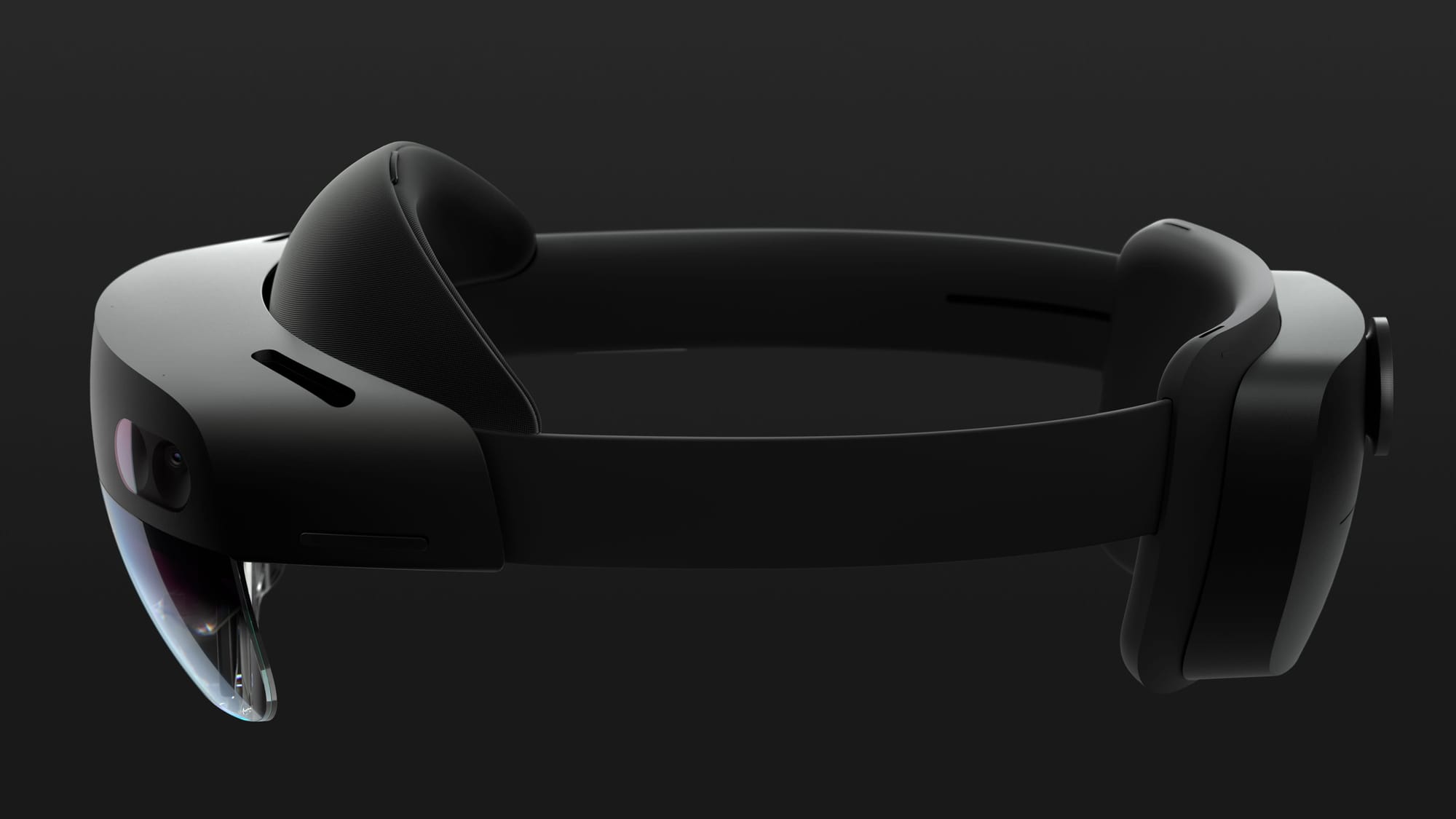
Despite being discontinued in 2025 with no HoloLens 3 announced, the Microsoft HoloLens 2 remains relevant in enterprise environments. This augmented reality headset projects holograms into your physical space and excels in business, industrial, and educational applications. While no longer cutting edge, its robust Windows integration and specialized enterprise features keep it valuable in professional settings.
Key Specifications:
- Display: See-through holographic waveguide lenses with 2k 3:2 light engines
- Processor: Qualcomm Snapdragon 850 with custom HPU
- Memory: 4GB LPDDR4x system DRAM
- Storage: 64GB UFS 2.1
- Battery Life: 2-3 hours of active use
- Weight: 566 grams
- Field of View: 96.1° diagonal
- Controls: Hand tracking, eye tracking, voice commands
Pros
- Excellent enterprise integration
- Precise hand and eye tracking
- Windows ecosystem compatibility
- Comfortable for extended wear
- Robust build quality
Cons
- Discontinued product line
- Limited field of view
- Expensive for aging technology
- Limited consumer applications
- Heavier than newer competitors

4. Ray-Ban Meta Smart Glasses
$299
Ray-Ban Meta Smart Glasses represent the most stylish and socially acceptable form of smart eyewear in 2025. Unlike bulky headsets, these glasses blend seamlessly into everyday life while offering AI capabilities, photo/video capture, and audio features. With an ultra-wide 12MP camera, five-mic array, and integration with Meta AI, they’re perfect for casual, everyday augmented reality experiences.
Key Specifications:
- Camera: Ultra-wide 12-megapixel camera
- Audio: Five-mic audio system, improved speakers
- Storage: 32GB
- Battery Life: 4 hours on a single charge (up to 32 hours with charging case)
- Connectivity: Bluetooth, works with Meta AI app
- Controls: Touch controls, voice commands, capture button
- Frame Styles: Wayfarer, Skyler, and Headliner (multiple color options)
Pros
- Fashionable, everyday design
- Excellent Meta AI integration
- High-quality photo and video capture
- Long battery life with charging case
- Prescription lens compatibility
Cons
- No display capabilities
- Requires smartphone for full functionality
- Limited AR capabilities
- Privacy concerns with camera
- Meta ecosystem dependency

5. Google Smart Glasses (Android XR)
Price TBA
Google is making its return to the smart glasses market in 2025 with its new Android XR platform. While full details are still emerging, these glasses are expected to offer seamless integration with Google’s AI ecosystem, particularly Gemini AI, while maintaining a form factor closer to regular eyewear. Unlike the discontinued Google Glass Enterprise Edition, these new glasses target both consumers and professionals.
Expected Features:
- Integration: Android XR platform and Gemini AI
- Form Factor: Lightweight, similar to regular glasses
- Functionality: Camera, microphones, and speakers
- User Experience: Phone-paired operation
- Target Market: Both consumer and professional users
- Ecosystem: Deep Android and Google services integration
Potential Pros
- Google AI and Assistant integration
- Mainstream-friendly design
- Android ecosystem compatibility
- Likely competitive pricing
- Strong developer support expected
Potential Cons
- Still in development
- Limited information available
- Google’s mixed track record with wearables
- May face privacy concerns
- Uncertain feature set
Smart Glasses Comparison Chart
| Feature | Apple Vision Pro | Meta Quest 3 | Microsoft HoloLens 2 | Ray-Ban Meta | Google Smart Glasses |
|---|---|---|---|---|---|
| Type | Mixed Reality Headset | Mixed Reality Headset | Augmented Reality Headset | Smart Glasses | Smart Glasses (upcoming) |
| Price | $3,499 – $3,899 | $499 – $649 | $3,500 | $299 | TBA |
| Display | Dual micro-OLED (23M pixels) | Dual LCD (2064×2208/eye) | Holographic waveguide | None | TBA |
| Processor | Apple M2 + R1 | Snapdragon XR2 Gen 2 | Snapdragon 850 + HPU | Not specified | TBA |
| Memory | 16GB | 8GB | 4GB | Not specified | TBA |
| Storage | 256GB – 1TB | 128GB/512GB | 64GB | 32GB | TBA |
| Battery Life | 2-2.5 hours | 2-3 hours | 2-3 hours | 4 hours (32h with case) | TBA |
| Weight | ~600-650g + 353g battery | 515g | 566g | ~50-70g | TBA |
| Field of View | ~110° (estimated) | 110° horizontal, 96° vertical | 96.1° diagonal | N/A | TBA |
| Primary Use | Professional, entertainment | Gaming, entertainment | Enterprise, industrial | Social, casual | TBA |
Which Smart Glasses Should You Buy in 2025?
For the Ultimate Mixed Reality Experience: If budget is no concern and you want the most premium mixed reality experience available, the Apple Vision Pro delivers unmatched visual quality, tracking precision, and ecosystem integration. It’s the ultimate choice for professionals, creatives, and tech enthusiasts who demand the best.
For the Best Value: The Meta Quest 3 continues to offer the best balance of performance and affordability. With impressive mixed reality capabilities, a vast content library, and standalone operation, it’s the most accessible entry point into high-quality VR and AR experiences.
For Enterprise Solutions: Despite being discontinued, the Microsoft HoloLens 2 remains relevant in specialized enterprise environments. Its Windows integration and robust enterprise features make it valuable for specific business, industrial, and educational applications.
For Everyday Augmented Reality: The Ray-Ban Meta Smart Glasses are unmatched for everyday wearability. If you want smart glasses you can actually wear all day without drawing attention, while still enjoying AI features, photo/video capabilities, and audio, these are your best choice.
For Google Ecosystem Fans: Those heavily invested in the Google ecosystem may want to wait for more details about the upcoming Google Smart Glasses with Android XR. With Gemini AI integration and Google’s software expertise, these could be a compelling option when released.
The smart glasses market in 2025 offers more choice and capability than ever before. Whether you prefer immersive mixed reality or subtle everyday augmented reality, there’s a device that fits your needs and budget. As this technology continues to evolve, we can expect even more innovative features and improved form factors in the coming years.
Frequently Asked Questions
Smart glasses have matured significantly by 2025, offering genuine utility for both consumers and professionals. Whether they’re “worth it” depends on your specific needs and use cases. For professionals in fields like design, engineering, medicine, or education, AR glasses can dramatically increase productivity. For consumers, they offer a mix of entertainment, convenience, and social connectivity. With options ranging from subtle everyday glasses like the Ray-Ban Meta to immersive experiences like the Apple Vision Pro, there’s likely a product that provides value for your particular needs.
Yes, most modern smart glasses accommodate prescription needs. The Ray-Ban Meta offers prescription lens options directly through their ordering process (at additional cost). The Apple Vision Pro supports magnetic prescription inserts from ZEISS. The Meta Quest 3 has space for glasses inside the headset or can be used with optional prescription lens inserts. Always check the specific compatibility of your prescription with your chosen device before purchasing.
Battery life varies significantly between different types of smart glasses. Larger mixed reality headsets like the Apple Vision Pro and Meta Quest 3 typically last 2-3 hours on a charge due to their power-hungry displays and processors. More streamlined smart glasses like the Ray-Ban Meta can last about 4 hours of active use, with their charging case providing multiple additional charges (up to 32 hours total). Battery technology continues to improve, but for extended use, look for devices that can be used while charging or have hot-swappable batteries.
These terms describe different approaches to immersive technology:
VR (Virtual Reality) glasses completely replace your view of the real world with a virtual environment. They typically have opaque displays that block out reality entirely.
AR (Augmented Reality) glasses overlay digital information onto your view of the real world. They use transparent displays that allow you to see your surroundings with digital elements added.
Mixed Reality (sometimes called MR) falls between AR and VR. These devices can seamlessly blend virtual content with the real world and allow virtual objects to interact with physical spaces. They typically use cameras to capture the real world and displays to show the combined view.
The Apple Vision Pro and Meta Quest 3 are mixed reality devices, the HoloLens 2 is primarily an AR device, and the Ray-Ban Meta is a camera-enabled smart glasses with no display.
Yes, smart glasses do raise legitimate privacy concerns. Devices with cameras or recording capabilities like the Ray-Ban Meta make it easier to capture photos or videos discreetly. Most responsible manufacturers have built in privacy features such as camera indicator lights, clear capture gestures or verbal commands, and privacy settings. The Apple Vision Pro includes an outward-facing display showing when the user is capturing content. When considering any smart glasses purchase, it’s important to understand the privacy features, data collection practices, and to use the technology responsibly and ethically.